
Burgundian Rulers & Their Coins
BURGUNDY · THE LOW COUNTRIES · MEDIEVAL COINAGE
Burgundian Rulers & Their Coins
Medieval Burgundian coins tell the story of a dynasty that brought much of the Low Countries under a single ruler. From Flemish lions to shared silver denominations, their designs show how regional traditions and princely ambition developed together.
Follow six rulers from Philip the Bold to Philip the Handsome through coins photographed by NumisAntica. Historical examples from our archive sit alongside a selected coin from our collection, linking the people and events to objects you can examine for yourself.
Burgundy was more than one territory
The Duchy of Burgundy in eastern France and the Burgundian Netherlands were geographically separate. The latter consisted of counties and duchies such as Flanders, Brabant, Hainaut and Holland. They shared a ruler but retained distinct rights and institutions. “Burgundian” therefore describes a dynastic connection, rather than a single medieval country.
Dates below describe each ruler’s position or government. Individual coins may belong to a shorter issue period. Archived examples illustrate the history and are not necessarily available for purchase.
Philip the Bold
Duke of Burgundy, 1363–1404 · Count of Flanders, 1384–1404
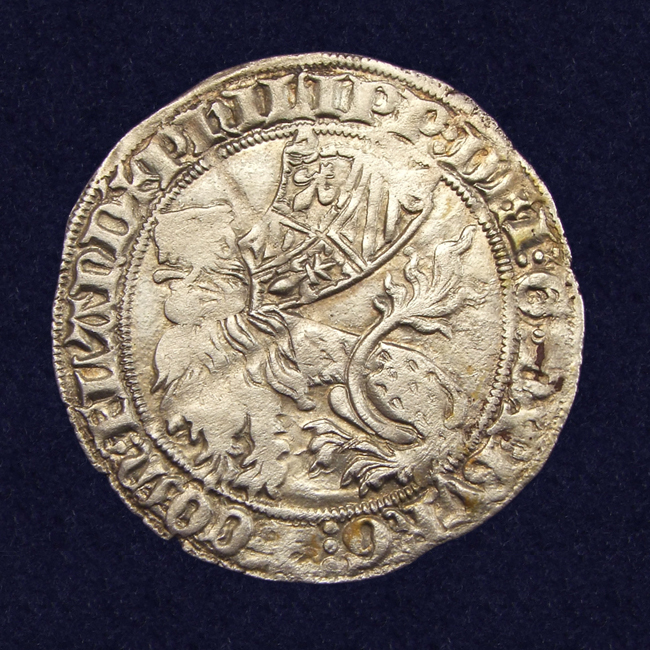
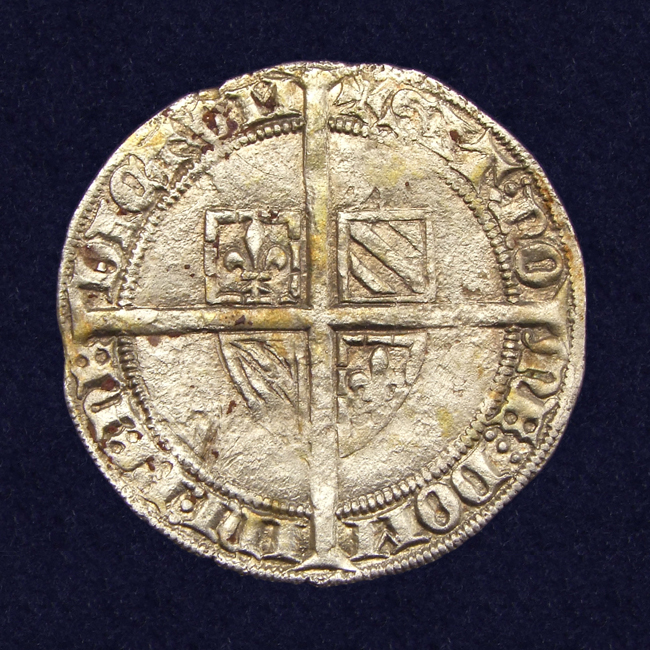
Flemish botdrager struck under Philip the Bold. Obverse and reverse; photographs from the NumisAntica archive.
From Burgundy to Flanders
Philip the Bold, a son of King John II of France, received the Duchy of Burgundy in 1363. His marriage to Margaret of Flanders brought a much wider inheritance in 1384, linking Burgundy with the wealthy Flemish towns. This was the beginning of the Valois dukes’ expansion into the Low Countries.
The lion of Flanders
The name botdrager comes from the helmet worn by the lion on the original Flemish type. The example above shows a later design, with the lion wearing a heraldic mantle. The animal represents Flanders: a recognisable emblem for those unable to read the surrounding inscription.
Money across neighbouring lands
Philip governed territories with their own institutions and monetary traditions. His Flemish issues belong to the early stages of Burgundian rule, before the broader currency reforms of his grandson Philip the Good. Comparing their designs shows how local symbols survived within an expanding dynasty.
John the Fearless
Duke of Burgundy, 1404–1419
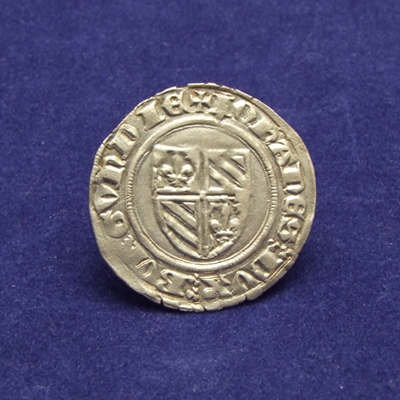
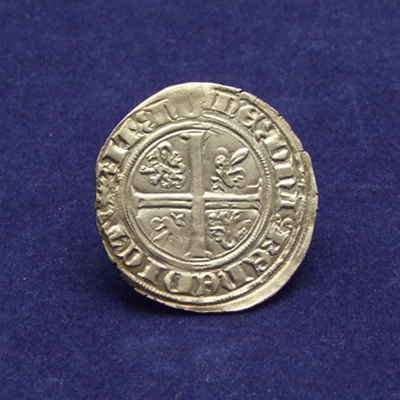
Grand blanc of John the Fearless, issued in Burgundy. Obverse and reverse; NumisAntica archive photographs.
A prince in a divided France
John inherited his father’s Burgundian and Flemish possessions in 1404. His struggle for influence at the French court became part of the conflict between the Burgundian and Armagnac factions during the Hundred Years’ War.
Assassination and succession
In 1407, John ordered the assassination of Louis, Duke of Orléans. He was himself killed during a meeting with the dauphin at Montereau in 1419. His son, Philip the Good, succeeded him, carrying the consequences of this violent rivalry into the next generation.
One ruler, different coinages
The illustrated grand blanc belongs to Burgundy itself, rather than Flanders. It is a useful reminder that “Burgundian coin” can describe coins from different territories. A ruler’s name alone is insufficient for identification: the denomination, regional titles and design also matter.
Philip the Good
Duke of Burgundy, 1419–1467
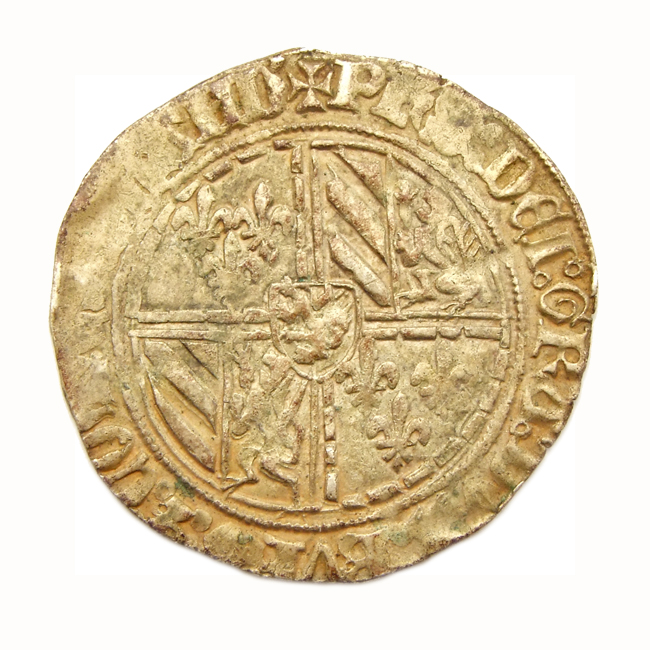
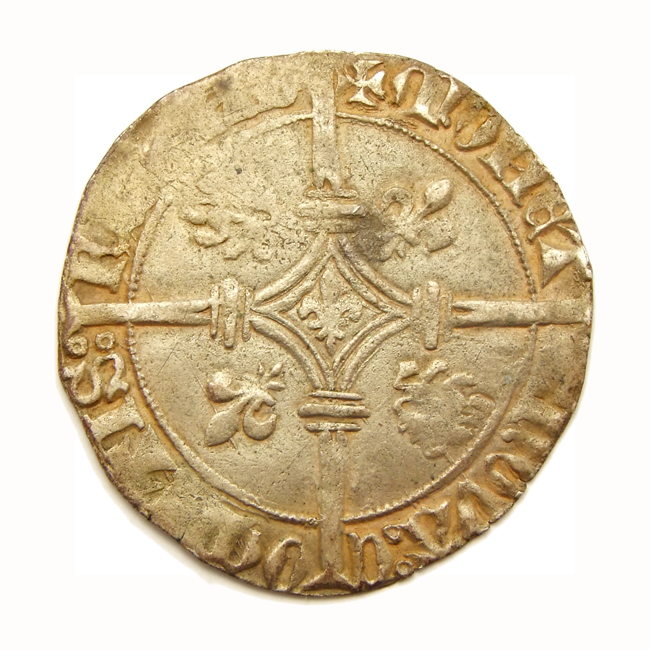
Flemish vierlander of Philip the Good. This silver denomination was part of his common coinage for four territories.
Building the Burgundian Netherlands
Philip brought Brabant and Limburg, followed by Hainaut, Holland and Zeeland, under his authority. His court became a centre of artistic patronage. In 1430 he founded the Order of the Golden Fleece, whose insignia became closely associated with the Burgundian dynasty.
The vierlander: money for four lands
The reform of 1433–1434 established a common coinage for Flanders, Brabant, Hainaut and Holland. The silver double groot became known as the vierlander, referring to these four lands. Shared standards made coinage more consistent across territories ruled by the same prince.
Unity without erasing local identity
Similar designs did not make every issue identical. Inscriptions and marks still distinguished the issuing territory or mint. The shield, cross, lions and lilies on these coins offer a compact introduction to the relationship between dynastic authority and regional identity.
Charles the Bold
Duke of Burgundy, 1467–1477 · Karel de Stoute
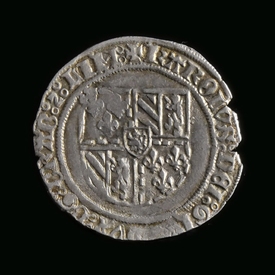
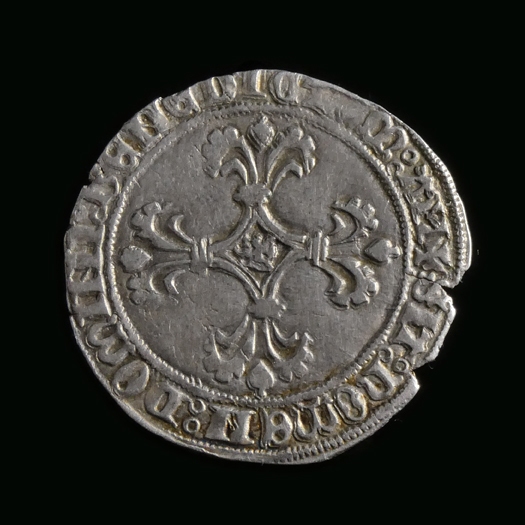
Charles the Bold: silver double stuiver, Leuven, 1468–1474. Undated; 27.5 mm, 3.10 g. NumisAntica article 19-5710.
Ambition and the battle of Nancy
Charles inherited his father’s territories in 1467 and pursued an ambitious policy of expansion. His death at the Battle of Nancy in 1477 left his daughter Mary to defend a contested inheritance. The Duchy of Burgundy passed into French hands, while much of the Netherlandish inheritance ultimately came under Habsburg rule.
A double stuiver from Leuven
The illustrated silver double stuiver was struck at Leuven in Brabant between 1468 and 1474. It has no year on the coin: its date range comes from the documented issue. The Burgundian shield appears on the obverse; the reverse has a floriated cross with a small lion at its centre.
Read the ruler’s titles
KAROLVS identifies Charles. The abbreviated obverse legend names him as duke of Burgundy, Brabant and Limburg. On the reverse, SIT NOMEN DOMINI BENEDICTVM means “Blessed be the name of the Lord”. The type is catalogued as Vanhoudt 32-LE.
Mary of Burgundy
Ruler of the Burgundian Netherlands, 1477–1482
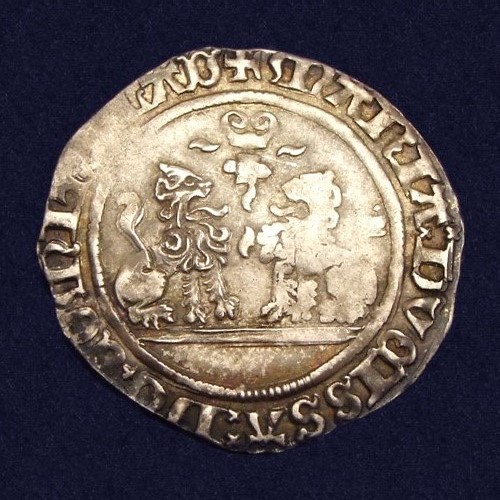
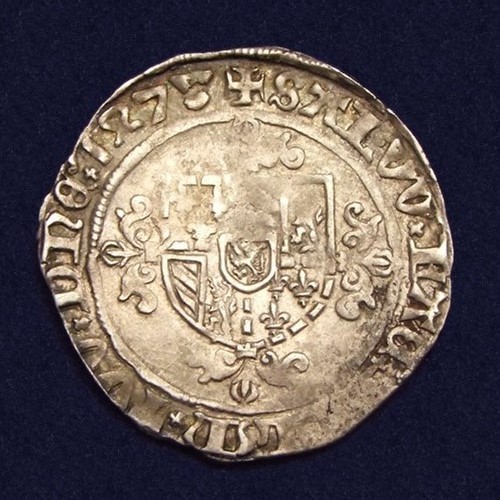
Mary of Burgundy: double briquet struck at Bruges in 1478. Obverse and reverse; NumisAntica archive photographs.
An inheritance under pressure
Mary succeeded Charles the Bold in 1477. Faced with French claims and demands from her own territories, she granted the Great Privilege, restoring important rights to the provinces and towns. Burgundian government depended on negotiation as well as dynastic power.
Marriage and the Habsburg connection
Her marriage to Maximilian of Austria in the same year joined the Burgundian inheritance to the House of Habsburg. Mary died in 1482 after a riding accident, leaving her young son Philip as heir. The succession opened a prolonged struggle over the government of the Low Countries.
The briquet as a dynastic emblem
The illustrated Bruges double briquet is dated 1478. A briquet is a fire steel, used with flint to make sparks. The fire steel became a recognisable Burgundian emblem, also appearing in the collar of the Order of the Golden Fleece. A practical object thus became a symbol of princely authority.
Philip the Handsome
Inherited in 1482 · Personal rule, 1494–1506 · Filips de Schone
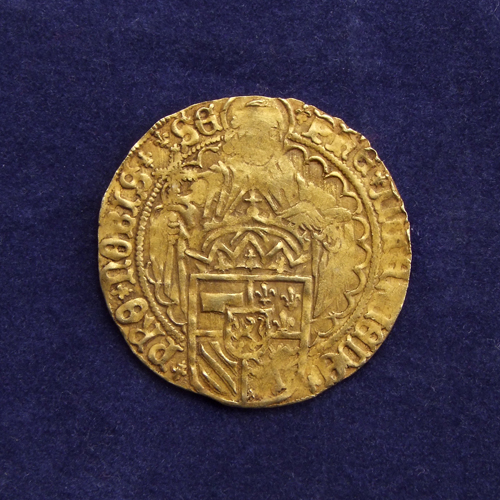
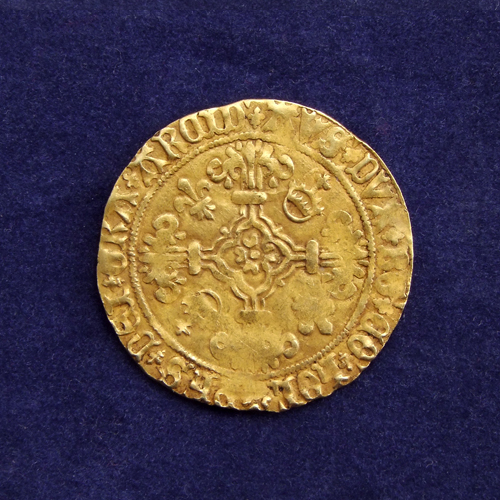
St Philip gold gulden of Philip the Handsome, Dordrecht, 1499–1506. Obverse and reverse; NumisAntica archive photographs.
A child heir, then a ruling prince
Philip inherited his mother Mary’s territories in 1482, while still a child. His father Maximilian’s role in their government was contested by the Netherlandish estates. Philip assumed personal rule in 1494, so his inheritance date and the start of his own government should not be confused.
From the Low Countries to Castile
His marriage to Joanna of Castile in 1496 connected the Burgundian-Habsburg family with the Spanish crowns. Philip became king of Castile in 1506, shortly before his death. Their son, the future Charles V, would inherit territories far beyond the Low Countries.
A saint on a gold coin
The illustrated gold gulden from Dordrecht features St Philip, the ruler’s namesake. It adds a different visual language to the shields and crosses of the silver issues. The coin links religious imagery with the prince’s identity, while its mint connects the wider dynasty to a particular Netherlandish town.
What to look for on a Burgundian coin
Names and titles
The legend around the edge often identifies the ruler and the territories claimed. Latin abbreviations such as DVX (duke) and COMES (count) help distinguish regional issues. Names may appear in Latin rather than their familiar English or Dutch forms.
Shields, crosses and mint marks
A quartered shield brings several heraldic identities into one design. Crosses and religious inscriptions were also common. Small symbols can be significant, but they should be checked against a catalogue: not every decorative detail identifies a mint.
Dates and denominations
Many medieval coins are undated. A catalogue may provide an issue period from documentary evidence, rather than a year visible on the coin. Terms such as groot, double groot, stuiver and gold gulden belong to monetary systems that changed over time; they are not interchangeable.
The individual coin
Hand striking gives each coin its own centring and detail. Wear can leave parts of a legend unreadable. Compare both sides, the metal, diameter, weight and catalogue reference rather than relying on a single motif. Clear photographs help separate what is visible from what is inferred.
Continue exploring
The illustrated coins range from regional silver issues to a gold gulden. Together they show why medieval coin collecting can reveal far more than a succession of rulers: money also records changing political relationships, religious imagery and the identity of towns and territories.
Browse medieval coins of the Low Countries
Explore the full coin collection
Sources and further reading
Written and illustrated by NumisAntica. Historical context and coin terminology checked against museum collections, archival information and numismatic references. All coin photographs on this page are from NumisAntica.