
Beads: History and Care

Small objects. Remarkable histories.
Ancient Beads: History, Jewellery & Care
From Egyptian faience to Roman glass, ancient beads offer a personal connection to the past. Their colours, shapes and craftsmanship reflect the people who made, traded and wore them.
Explore ancient beads & jewellery →A little care goes a long way
A few simple habits help preserve the character of your ancient bead jewellery.
- Remove it before showering, swimming or exercising.
- Avoid direct contact with perfume, lotions and cleaning products.
- Handle gently and protect the beads from knocks.
- Use a soft, dry cloth on modern fittings; avoid rubbing or polishing weathered bead surfaces.
- Store each piece separately in its box, away from damp conditions and excessive heat.
Follow any additional advice supplied with your piece. We are happy to help with questions about care.
Ancient beads, modern designs
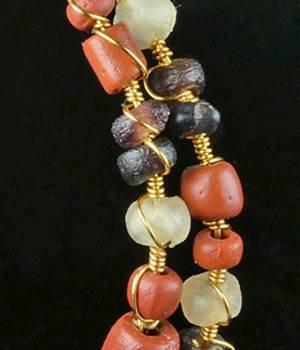
Selected ancient beads are incorporated into handmade jewellery using modern gold- or silver-plate nickel-free metal fittings. Wire wrapping, linked designs and carefully chosen spacers bring out their individual character.
The beads are ancient; the finished jewellery is a contemporary creation.
Discover the story behind the beads
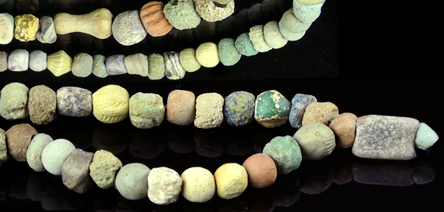
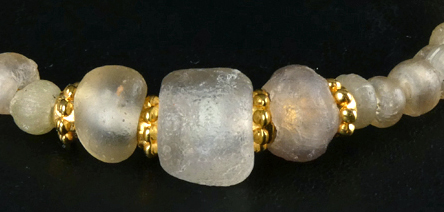
What gives ancient glass its iridescence?
Some ancient glass develops delicate, shimmering surface layers through weathering during burial. This iridescence is part of its present appearance and should not be polished away. Not every ancient glass bead has an iridescent surface.
Made personal
We work with two local Dutch designers. Some designs can be adjusted in length or adapted to your preferences. Contact us to discuss the possibilities.
Presentation & information
When size permits the jewellery will be supplied in a jewellery box with protective foam. These boxes do not contain tarnish-accelerating chemicals and are safe to store your jewellery. A Certificate of Authenticity in PDF format is available on request.