For centuries, ships carried people, goods and treasure across dangerous seas. Many never reached their destination, sinking with valuable cargo that lay hidden for hundreds of years. These historic shipwrecks not only reveal dramatic stories of exploration, trade, and conflict, but also preserve coins and artefacts that bring the maritime past to life..
Shipwrecks of the Dutch East India Company (VOC), founded in 1602, have yielded gold and silver coins, clay pipes, wine bottles and porcelain. Alongside Asian trading vessels, these seventeenth- and eighteenth-century wrecks reveal stories of overseas trade, daily life and disaster.
Explore the wrecks below, discover the stories behind their cargoes and click an image to view a larger version.
Bottles at Sea
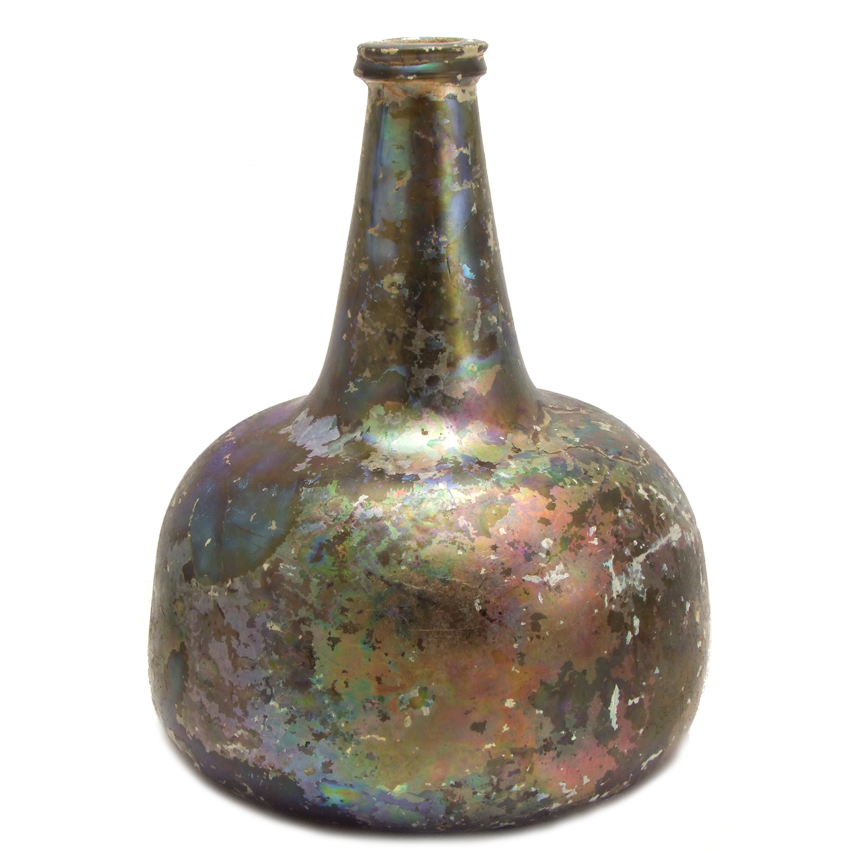
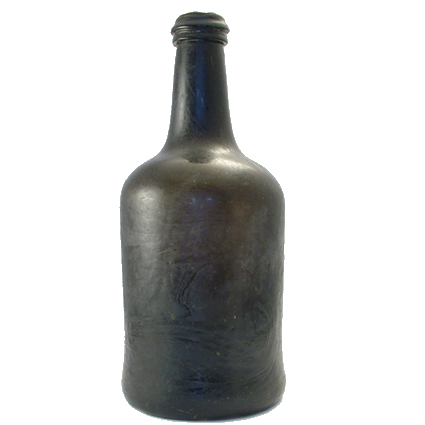
Wine bottles are among the everyday objects found on historic wrecks. Their shapes changed over time, from squat, rounded forms to taller cylindrical bottles.
The broad base of an "onion bottle" helped it stand securely, while thick, dark glass protected its contents from light. The examples below illustrate an onion bottle associated with the VOC period and a bottle retrieved from the water near Barbados.
Onion-shaped wine bottle, typical of the late seventeenth and early eighteenth centuries.
Bottle retrieved from the water near Barbados.
Discover the Shipwrecks
Akerendam (1725)
VOC treasure wreck off Runde
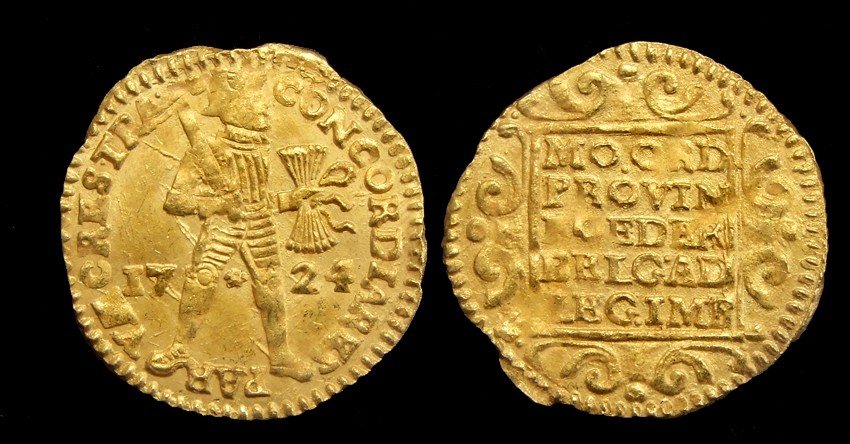
Utrecht, gold ducat 1724, recovered from the Akerendam.
The final voyage The VOC ship Akerendam was built in 1724 and departed on 19 January 1725 in convoy for Batavia, carrying about 200 people and 19 chests of gold and silver coins. On 8 March 1725, driven by a snowstorm, she struck near the cliffs of Runde Island on Norway's west coast. There were no survivors.
The Runde Treasure Five coin chests were recovered in the months after the disaster. Rediscovered by Swedish and Norwegian divers in 1972, the wreck yielded roughly 57,000 gold and silver coins. Among approximately 6,600 gold coins were Utrecht ducats dated 1724, previously known in very small numbers. The find became known as the Runde Treasure.
Museums and collectors The Norwegian share was divided between the University of Oslo's Coin Cabinet and Bergen Maritime Museum. The divers' share was auctioned in Switzerland in 1978, bringing coins from the wreck to collectors worldwide.
Blue-and-white porcelain saucer, recovered from the Ca Mau wreck.
Blue-and-white porcelain tea bowl, recovered from the Ca Mau wreck.
Discovery and cargo In 1998, fishermen discovered a wreck off the Ca Mau Peninsula in southern Vietnam. Around 130,000 ceramics were recovered, mostly porcelain intended for European markets, although some was destined for Asia. After Vietnamese museums made their selections, about 76,000 pieces were sold at auction in Amsterdam in 2007.
A trading voyage interrupted The ship is believed to have been a Chinese junk sailing from Canton (Guangzhou) towards the Dutch trading port of Batavia, now Jakarta. An intense fire on board, which fused some ceramics together, was probably the cause of the sinking.
Early eighteenth-century porcelain The cargo included blue-and-white porcelain made at Jingdezhen and dates to around 1725, during the early years of the Yongzheng reign (1723-1735). Tea bowls and saucers provide a glimpse of the growing European demand for Chinese porcelain.
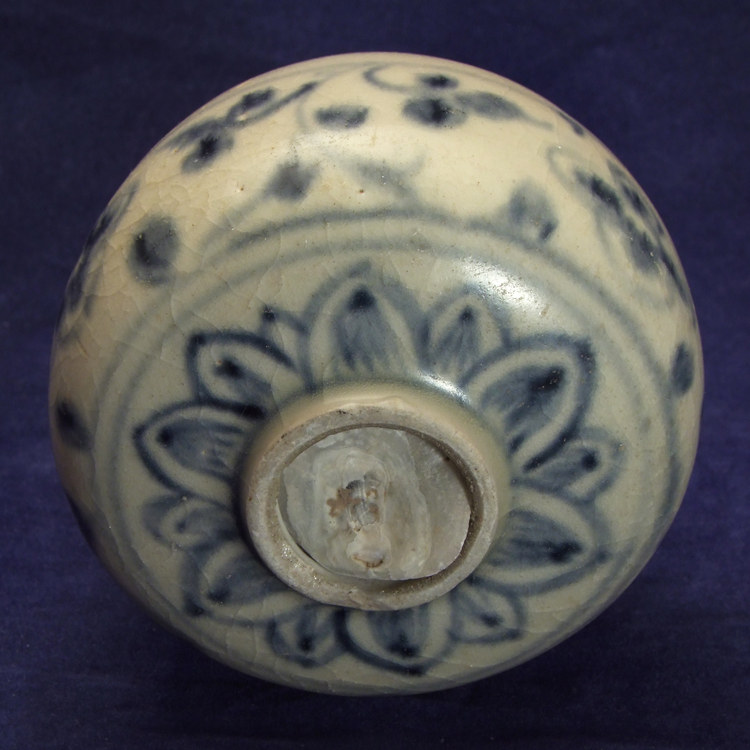
Ceramic water dropper from the Hoi An Hoard, with a shell enclosed inside.
A cargo of Vietnamese ceramics A trading vessel carrying a substantial cargo of Vietnamese ceramics sank off central Vietnam. The cargo is generally dated to the late fifteenth or early sixteenth century. Local fishermen located the wreck about 22 miles offshore in the early 1990s.
Recovering the hoard Excavation in the late 1990s recovered around 250,000 ceramic objects. The hoard has become an important reference collection for the study of Vietnamese export wares and maritime trade.
The story behind the finds The wreck and its recovery are described in Frank Pope's book Dragon Sea: A True Tale of Treasure, Archaeology, and Greed off the Coast of Vietnam. Some objects bear traces of their long stay on the seabed, including the shell enclosed in the water dropper illustrated here.
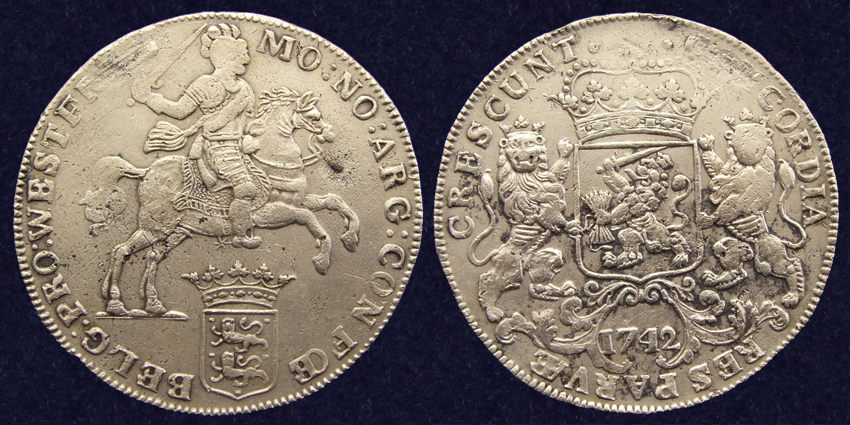
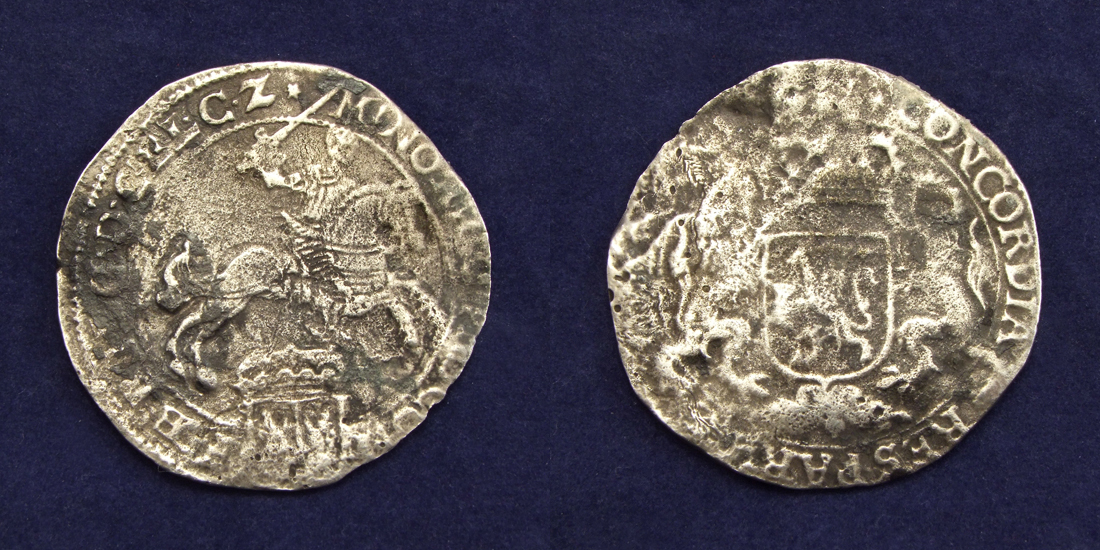
West Friesland, silver ducaton (Rijder) 1742, recovered from the Hollandia.
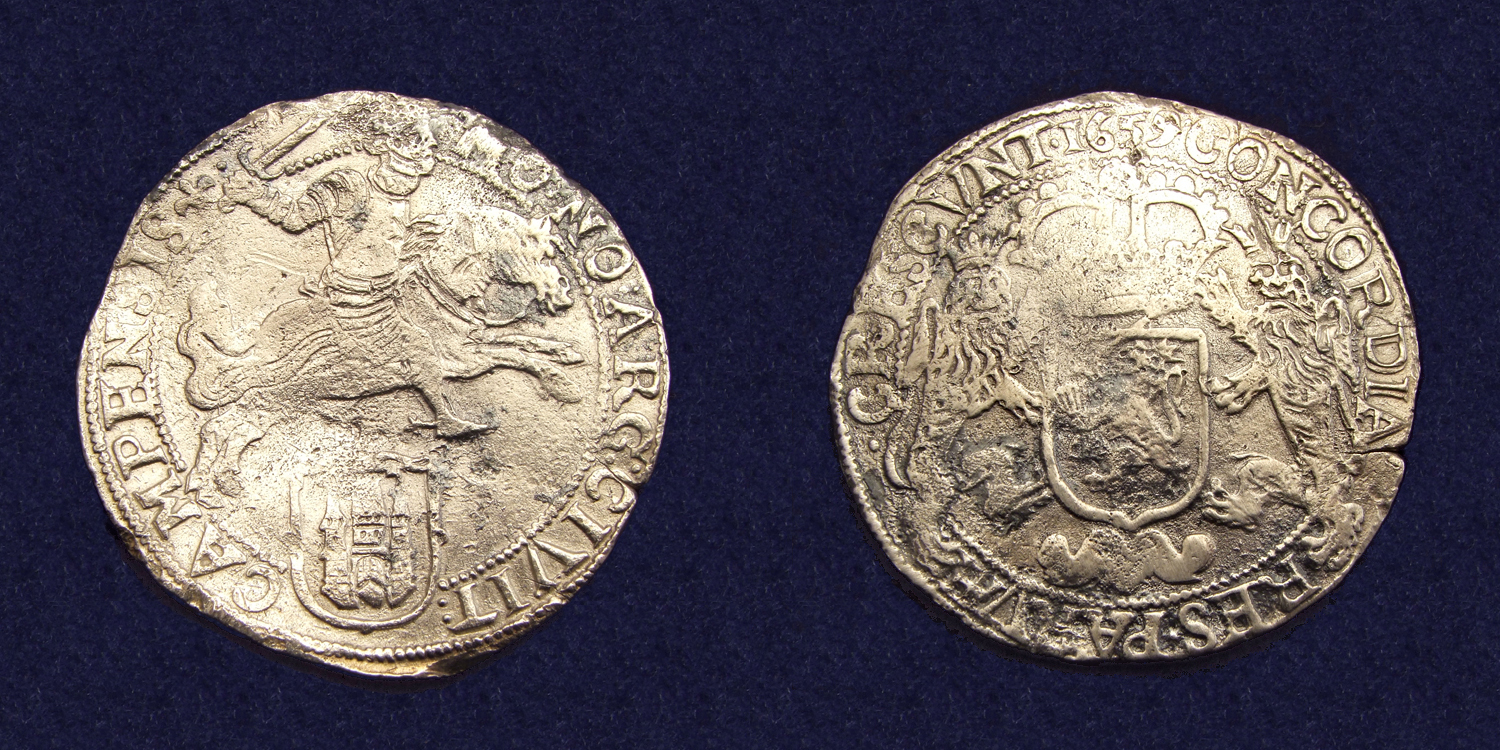
Kampen, silver ducaton (Rijder) 1659, recovered from the Hollandia.
Lost on her maiden voyage Built in Amsterdam in 1742, Hollandia sailed from Texel for Batavia on 3 July 1743. She carried an estimated 129,700 guilders in silver coins, along with sailors, soldiers and passengers. On 13 July she struck Gunner's Rock near the Isles of Scilly. There were no survivors.
Rediscovery and recovery The wreck was discovered in September 1971 by Rex Cowan. Subsequent recoveries brought up a large quantity of silver coins, together with bronze cannon, mortars and other objects.
Coins from the cargo The finds illustrate the money and equipment carried by VOC East Indiamen. The silver ducatons pictured here were struck in West Friesland and Kampen, decades apart, showing how older coins could remain in circulation alongside newer issues.
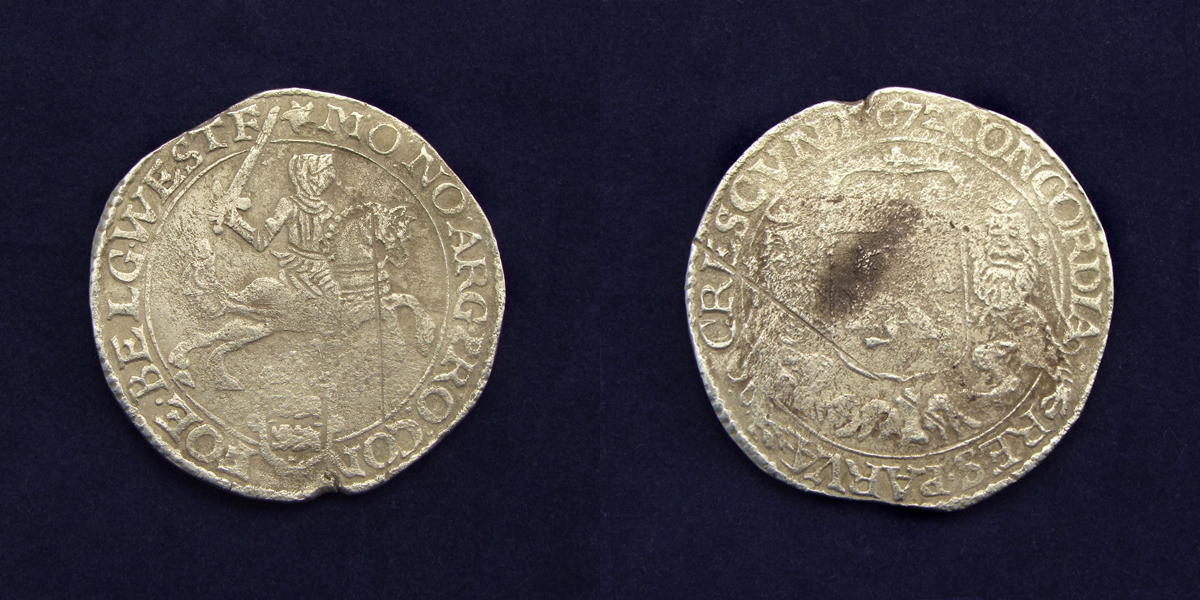
West Friesland, silver ducat 1672, recovered from De Liefde.
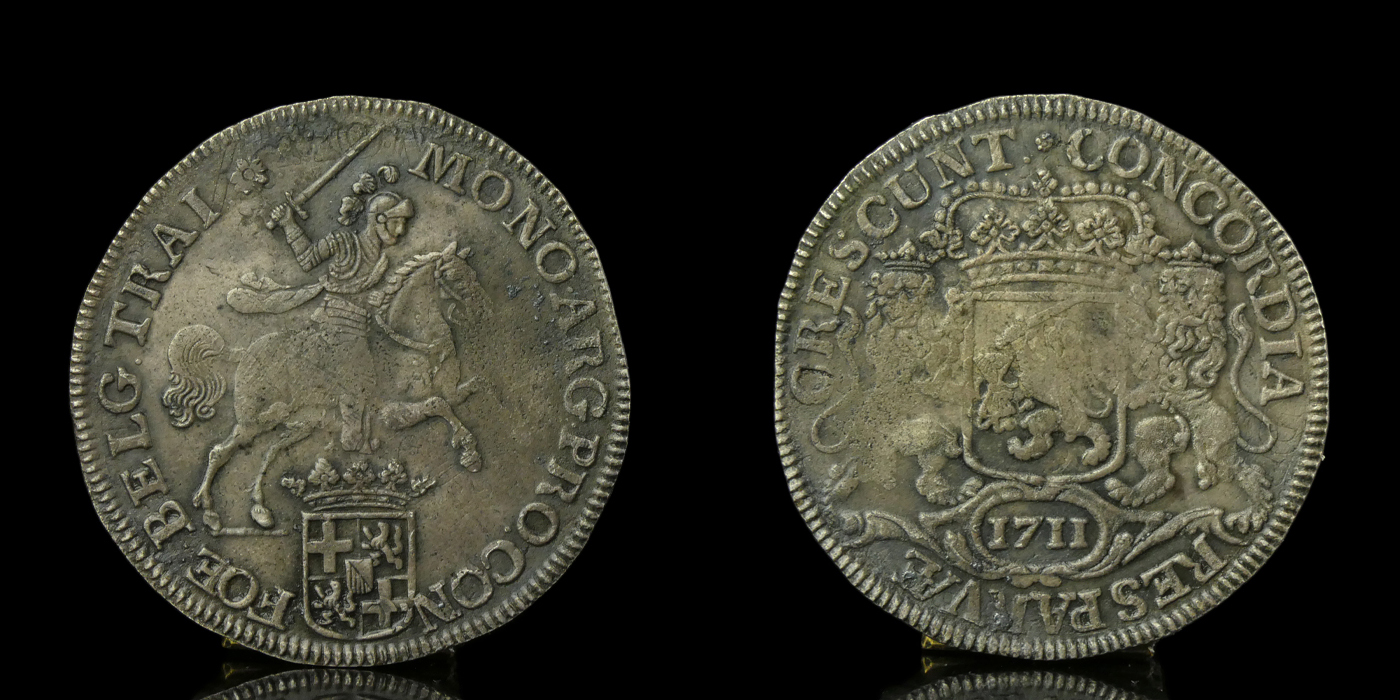
Utrecht, silver ducat dated 1711, the year De Liefde was lost.
A voyage to the East Indies De Liefde ("The Love") was built in Amsterdam in 1698 for the Dutch East India Company. In November 1711 she left Texel for the East Indies, carrying coins worth about 227,000 guilders to fund trade in Asia.
Disaster in the Shetland Islands Four days after departing, on 7 November 1711, De Liefde struck a reef near the Out Skerries in the Shetland Islands. Only one of the roughly 300 people on board survived.
Salvage and rediscovery A salvage attempt followed in 1712, but much of the treasure remained on the seabed. Rediscovered in 1965, the wreck yielded gold and silver coins, personal items and the ship's bell, marked with the VOC emblem and the year 1700.
Gelderland, silver ducat, dated within 1659-1677, recovered from the Meeresteijn wreck.
The Cape route The VOC ship Meeresteijn, also recorded as Merestein, left Texel in October 1701 for the East Indies, carrying a valuable consignment of silver coins for Batavia. Illness on board made fresh water and provisions urgently needed.
The wreck at Jutten Island On 3 April 1702, the ship struck near Jutten Island while entering Saldanha Bay, north of Cape Town. She broke apart during the night, and only 99 people survived. Sixteen chests of coins were recorded in her cargo.
Coins recovered from the seabed Rediscovery and salvage in the early 1970s brought silver coins and other artefacts to light. These finds offer insight into the Cape route and the hazards faced by VOC ships sailing towards Asia.
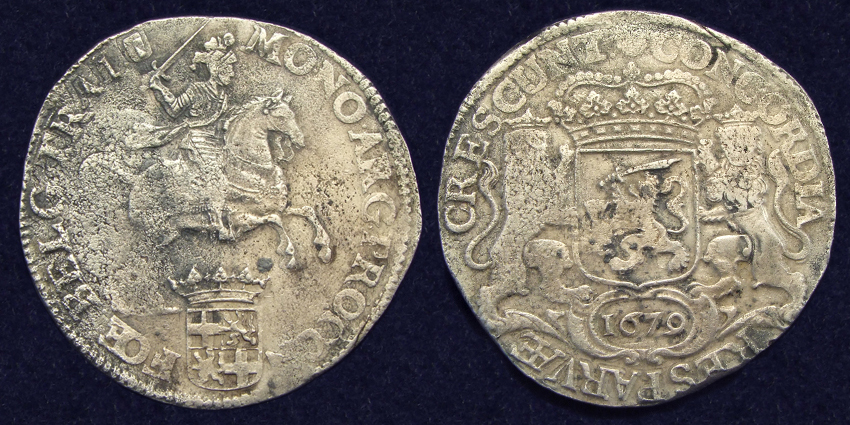
Utrecht, silver ducat 1679, recovered from 't Vliegend Hert.
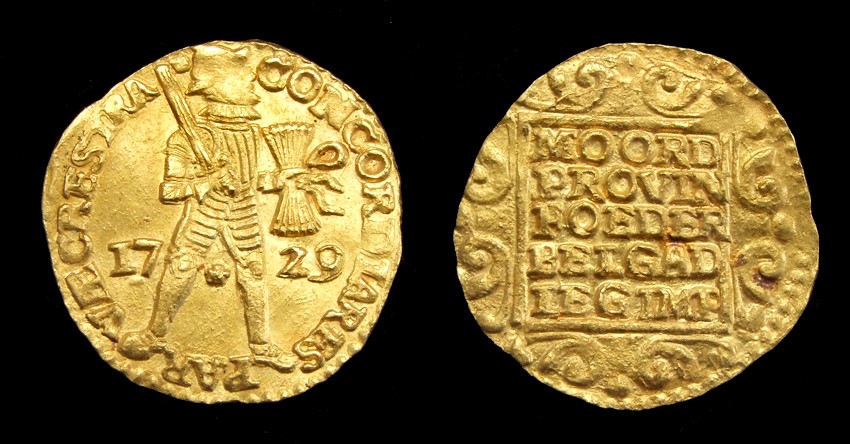
Utrecht, gold ducat 1729, recovered from 't Vliegend Hert.
A storm off the Scheldt On 3 February 1735, 't Vliegend Hert ("The Flying Deer") left the roadstead of Rammekens near Vlissingen for her second voyage to Batavia. During stormy weather she ran aground on a sandbank and subsequently sank. Everyone on board was lost.
Rediscovering the cargo The wreck was rediscovered in 1981. Salvage recovered wine bottles, ammunition and chests containing gold ducats and silver coins. Further recoveries followed in later years.
Company money and private trade Some recovered coins were not listed in the official cargo records and have been interpreted as evidence of smuggling. The finds reveal both the VOC's trading finances and the private commercial activities of people on board.
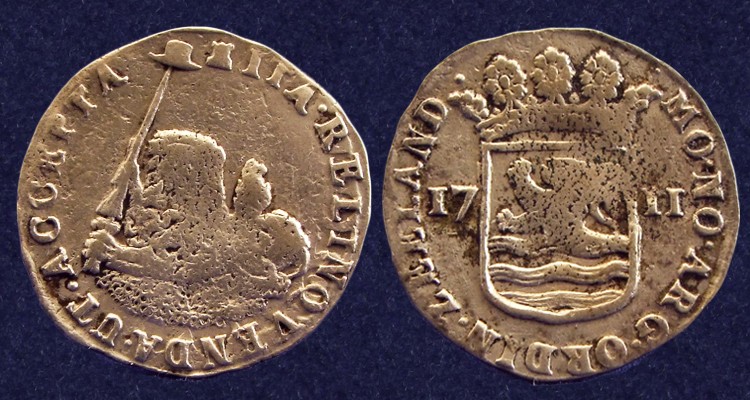
Zeeland, hoedjesschelling (six stuivers) 1711, recovered from the Zuytdorp wreck.
Departure in 1711, loss in 1712 Built in Middelburg in 1701 for the VOC Chamber of Zeeland, Zuytdorp sailed for Batavia in 1711. Her cargo included freshly minted Zeeland silver coins dated 1711. She was wrecked on the Western Australian coast in 1712, between present-day Kalbarri and Shark Bay.
Discovery and identification Wreckage was found in 1927, but the site was not positively identified as Zuytdorp until 1958. Archaeological evidence suggests that some people survived the initial disaster and reached the shore.
The silver cargo Coins recovered from the site include Zeeland six-stuiver pieces dated 1711. These finds illuminate VOC shipping towards the East Indies and the movement of Dutch silver coinage in the early eighteenth century.
Discover coins and artefacts from historic wrecks in our collection. Individual listings provide details of the object and its recorded shipwreck association.
Nice that you visit our site. Please indicate here which cookies we may place. The necessary cookies do not collect personal data. The other cookies help us to improve the site and your visitor experience. They also help us to inform you about our products. Are you going for an optimally working website including all the benefits? Then tick all the boxes!