
Roman Coin Denominations - A Guide to Ancient Roman Currency
NumisAntica · Historical Notes
Roman Coin Denominations: From the Denarius to the Tremissis
A Roman coin was more than a piece of metal. Its size, weight and denomination tell us how people paid for everyday goods, how emperors funded their governments and how money changed during periods of political uncertainty. The coins below offer a guide to the principal denominations represented in the NumisAntica collection, from the silver denarius and great brass sestertius to the silvered coinage of the later Empire.
Not every Roman province used the same currency. Alongside coins issued at Rome, cities across the eastern Mediterranean produced their own silver and bronze denominations, often bearing Greek inscriptions. These local issues deserve to be understood in their own context rather than forced into a single imperial table of values.
Explore Roman Coins in Our Shop ?
A Monetary System That Changed Over Time
Explore the Denominations
Choose a denomination to go directly to its history. Individual product pages can link to these same section anchors.
Imperial Denominations
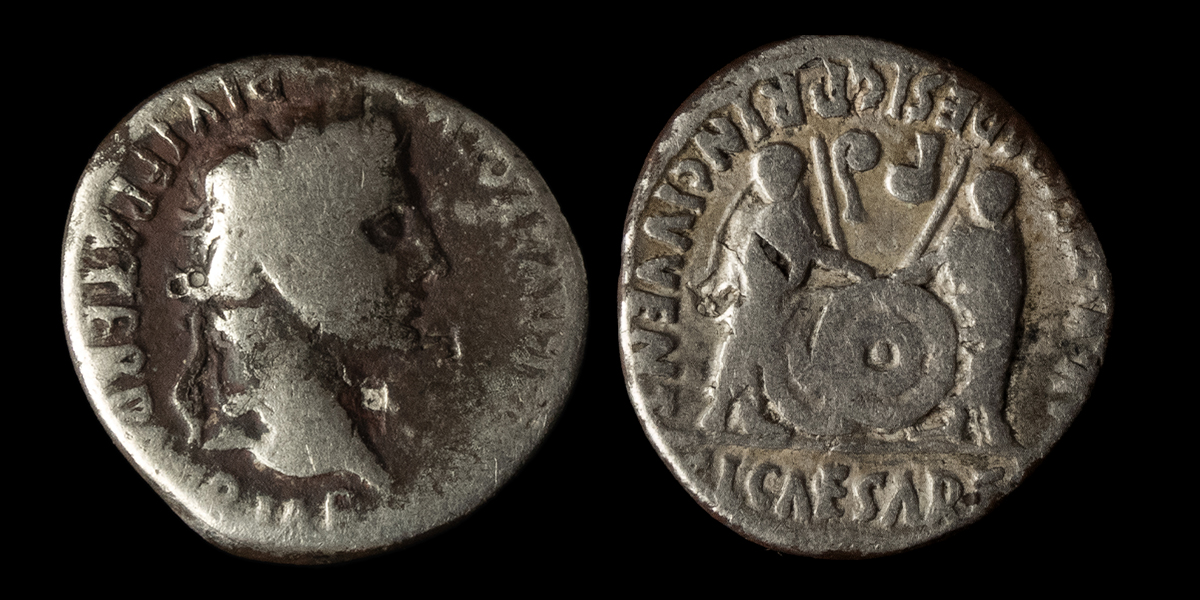
Denarius
The silver coin at the heart of Roman life
Few Roman coins were as familiar as the denarius. Introduced during the Republic in the late third century BC, it became the principal silver coin of the Roman world. Under the system established in the late Republic and continued by Augustus, one denarius was worth sixteen asses, or four sestertii. Its name remained familiar long after the silver coin itself had largely disappeared from everyday circulation.
The earliest denarii were struck in relatively fine silver. Over time, changes in weight and purity allowed successive governments to produce more coins from the available metal. The decline became particularly pronounced during the third century AD, when the antoninianus gradually took its place as the dominant silver-coloured denomination.
Denarii also make a remarkable historical record. A portrait of the ruler usually occupies the obverse, while the reverse could celebrate an imperial heir, a military victory, a deity or a public virtue. The example shown here depicts Augustus with his intended successors, Gaius and Lucius Caesar - a small coin carrying an ambitious message about the future of the dynasty.
At a glance: Silver coin · 16 asses in the standard imperial system
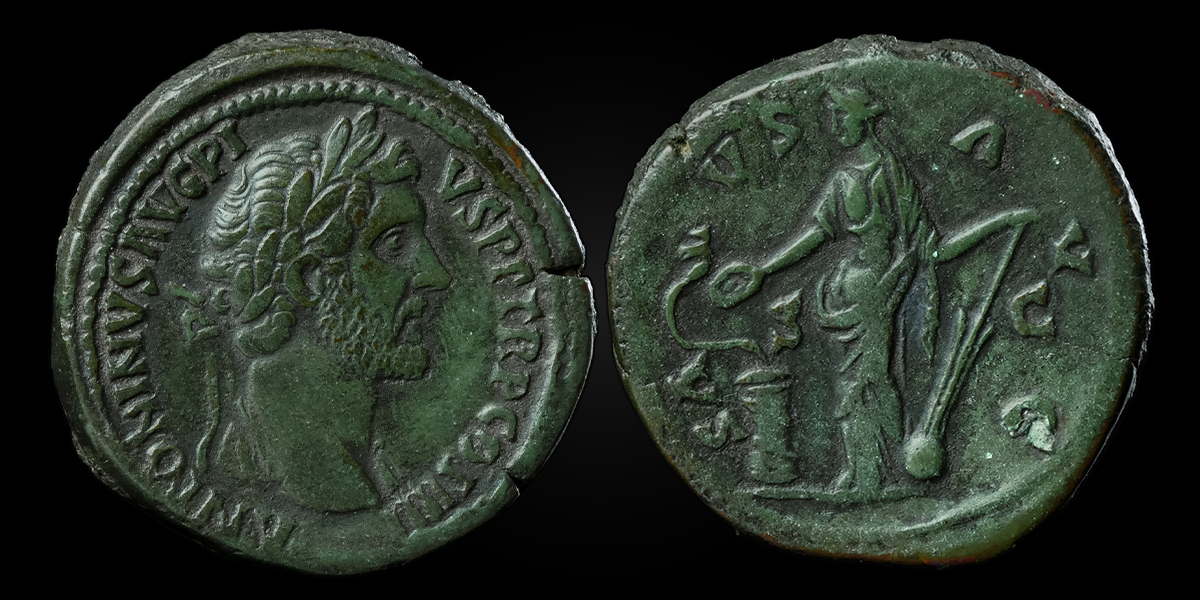
Sestertius
A large coin with room to tell a story
The sestertius began in the Republic as a small silver coin worth two and a half asses. Its value later became four asses, and under Augustus it acquired the form for which it is best known: a substantial brass coin, often more than 30 mm across. The broad surface offered Roman engravers generous space for detailed portraits, public buildings, ceremonies and scenes of military achievement.
Its name was also used as a unit of account. Roman writers described fortunes, debts and public expenditure in sestertii, making it one of the most recognisable denominations in the economic history of the Empire. Many sestertii struck at Rome bear the letters S C, traditionally expanded as senatus consulto - 'by decree of the Senate'.
A Pompeian wall inscription attributed to Hedone lists wine at one, two and four asses, a vivid reminder of the smaller sums involved in daily purchases. The Antoninus Pius sestertius selected here shows Salus beside an altar: the broad flan lets us study both the emperor's portrait and the symbolism of public health and well-being.
At a glance: Large brass coin · 4 asses / ¼ denarius
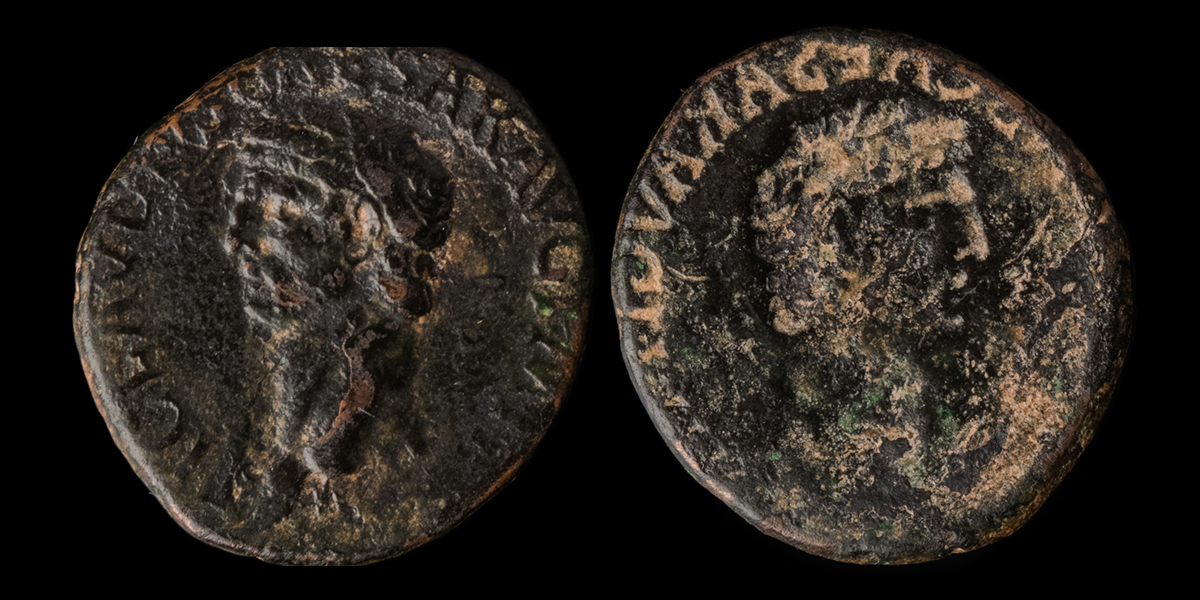
Dupondius
The two-as coin
Worth two asses, the dupondius occupied the middle of the Roman bronze-and-brass currency system. Under Augustus and his successors it was normally struck in orichalcum, a copper-and-zinc alloy that often had a more yellowish colour than the copper as. Age and patination can make the metals difficult to distinguish today.
On many later imperial issues a radiate crown helped identify the dupondius, although this was not a universal convention. The Claudius coin in the NumisAntica export illustrates another aspect of minting: it is a brockage, with a normal portrait on one side and an incuse, mirror-image impression on the other. Such errors offer a rare glimpse of the ancient striking process.
At a glance: Brass coin · 2 asses / ½ sestertius
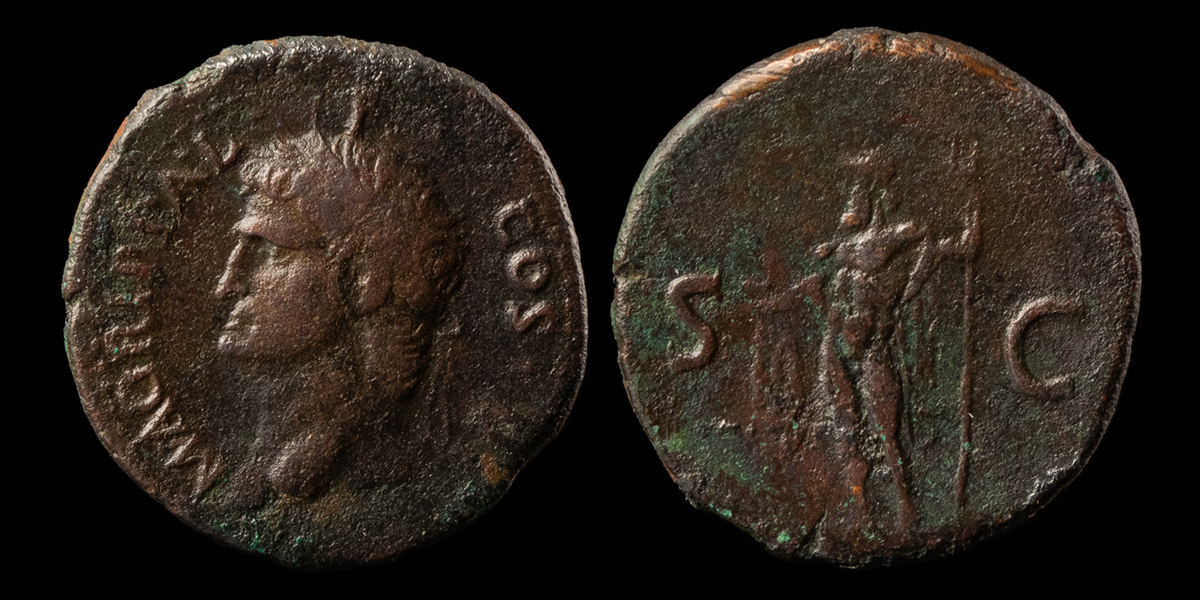
As
The everyday unit of small change
The as was a basic unit of Roman currency. Early Republican asses were heavy cast-bronze pieces, but their weight and production methods changed repeatedly. By the early Empire, the as was commonly a struck copper coin. Sixteen asses made one denarius, and four made one sestertius under the standard imperial relationship.
As coins often preserve particularly approachable historical scenes. The example selected from the NumisAntica collection honours Marcus Vipsanius Agrippa, Augustus' friend, general and son-in-law. Issued under Caligula, it shows Agrippa wearing a naval crown, while Neptune appears on the reverse. It recalls the naval achievements that helped establish Augustus' rule.
At a glance: Copper coin · 1 as / ¼ sestertius
Semis
Half an as
The word semis simply means 'half'. In the standard imperial system, a semis was worth half an as, or one thirty-second of a denarius. These modest coins were never as prominent as the denarius or sestertius, and their production varied considerably from one reign to another.
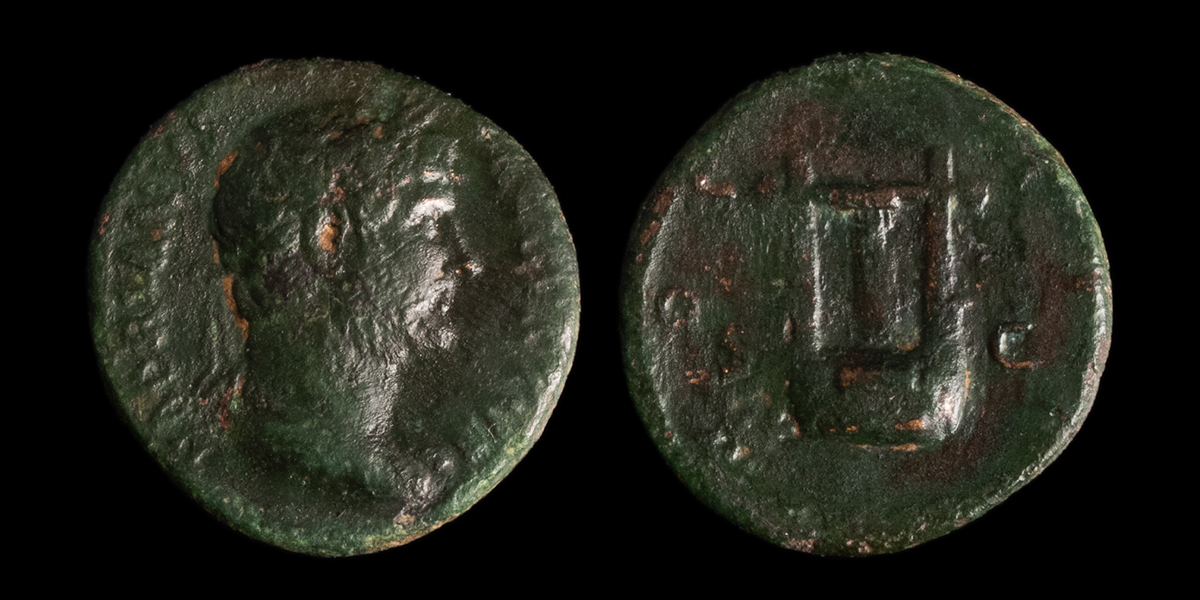
Although small, semisses can be surprisingly attractive. A Hadrianic example from the NumisAntica export combines the emperor's laureate head with a lyre on the reverse. It is a reminder that everyday denominations could carry carefully chosen images rather than merely simple value marks.
At a glance: Small bronze coin · ½ as
Quadrans
The smallest change in a great Empire
Worth a quarter of an as, the quadrans was one of the smallest denominations in the early imperial monetary system. Under the relationship of sixteen asses to a denarius, sixty-four quadrantes equalled one denarius. Its low value made it suitable for the minor transactions that rarely appear in grand historical accounts.
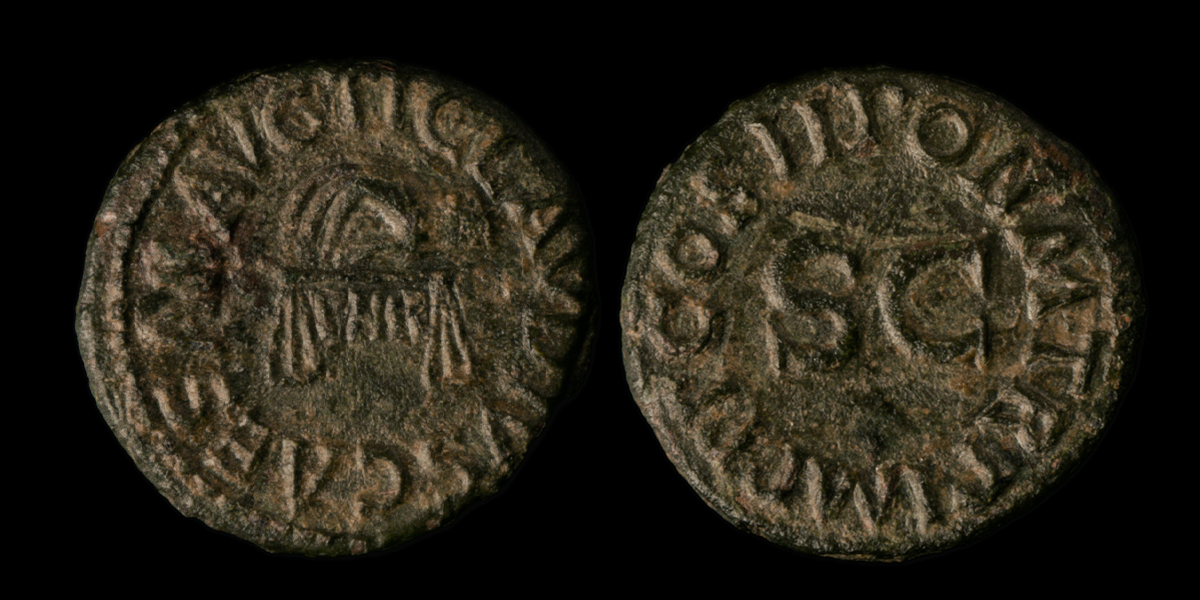
Quadrantes could be struck without a conventional imperial portrait. The Claudius example in the NumisAntica collection depicts a hand holding scales, with S C on the reverse. Its compact design shows how Roman coinage communicated civic and imperial authority even at the lowest monetary levels.
At a glance: Small bronze coin · ¼ as
Antoninianus
The coin of a changing Empire
Caracalla introduced a new radiate coin in 215 AD, apparently valued at two denarii but containing only about one and a half times as much silver as a contemporary denarius. Collectors call it the antoninianus, a modern term derived from the emperor's official name, Antoninus; we do not know what Romans of the period called the coin.
An emperor wearing a radiate crown is one of its clearest visual clues. On issues for women, a crescent often appears beneath the bust. Silver content fell sharply during the 'Crisis of the Third Century', until many antoniniani were essentially copper-alloy coins with a thin silvered surface. Reforms under Aurelian improved their appearance and attempted to restore confidence.
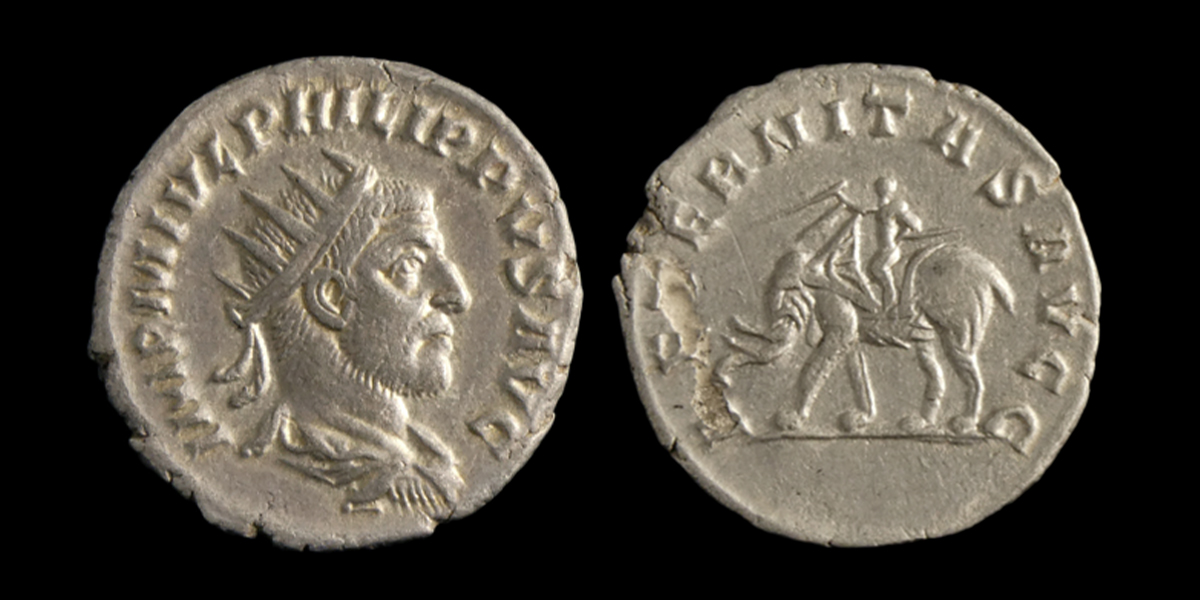
The Philip I example selected here belongs to the series marking Rome's thousandth anniversary and shows an elephant on the reverse. The coin's imagery celebrates the city's longevity, while the denomination itself tells a less reassuring story about the monetary pressures facing its rulers.
At a glance: Introduced in 215 AD · Initially tariffed at 2 denarii
Follis / Nummus
A new beginning after monetary turmoil
Diocletian reorganised Roman coinage around 294 AD, introducing a new large silvered copper-alloy piece now commonly called the follis or nummus. The ancient names and exact values of some denominations remain matters of scholarly debate, so the familiar modern terms are best treated as convenient catalogue labels.
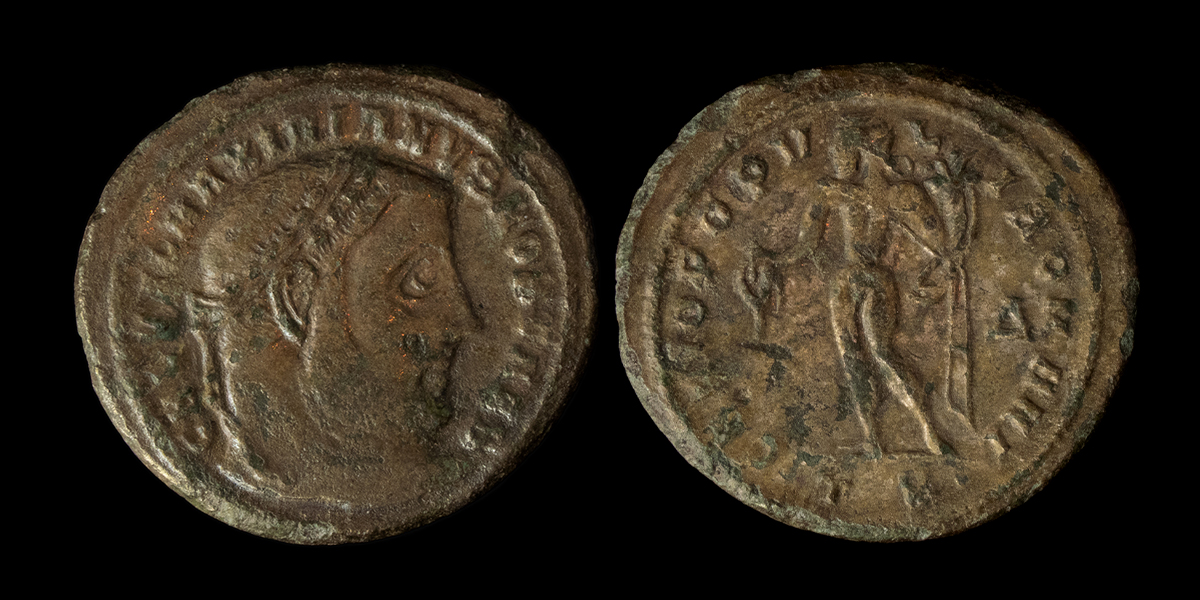
Early issues were relatively large, but the pieces became progressively smaller during the fourth century. A Galerius coin in the NumisAntica collection bears GENIO POPVLI ROMANI, 'to the Genius of the Roman people', a characteristic reverse of the Tetrarchic reform. In 301 AD Diocletian issued his Edict on Maximum Prices, an attempt to restrain inflation; its accounting denarii should not be confused with the earlier silver denarius coins.
At a glance: Introduced in Diocletian's reform of c. 294 AD
Tremissis
A small gold coin of the later Empire
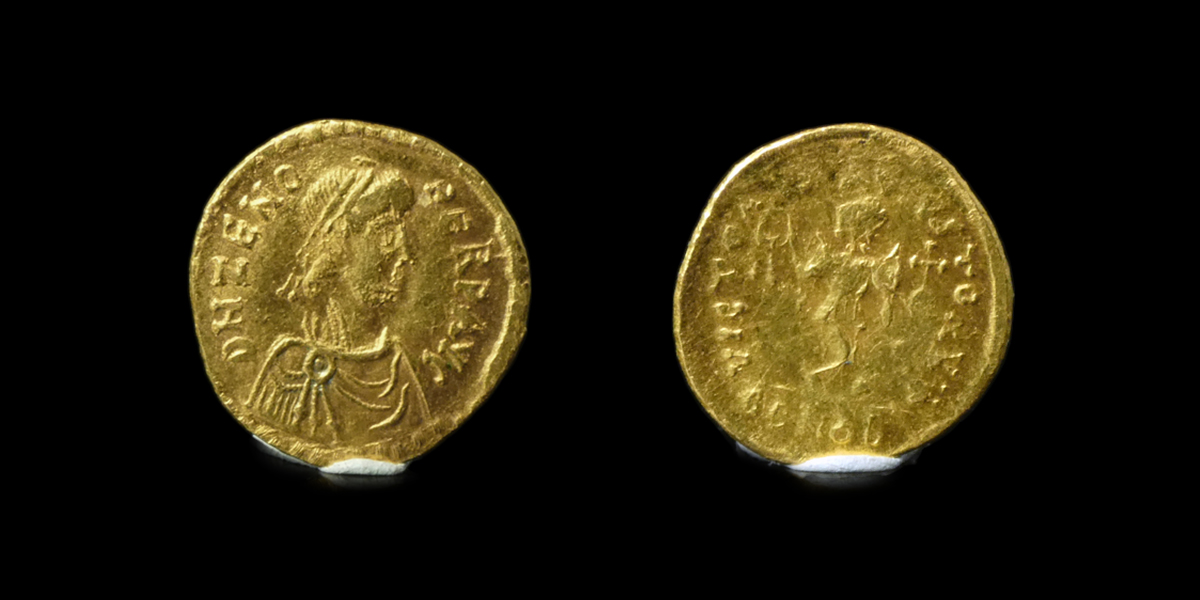
The tremissis was a gold coin valued at one third of a solidus, introduced in the late fourth century AD. It was much smaller than the great bronze sestertii of the early Empire, reflecting how dramatically the Roman monetary system had changed. Gold, rather than the old silver denarius, now provided the principal measure for many major payments.
The NumisAntica example bears the portrait of Zeno, who ruled the Eastern Roman Empire in the late fifth century. Its reverse depicts Victory, and the CONOB mintmark belongs to the visual language of late Roman gold coinage. The type bridges the history of the Roman Empire and the coinage of the early Byzantine world.
At a glance: Gold coin · ? solidus
Roman Provincial Coinage
Provincial mints could use denominations inherited from Greek and local monetary traditions. A tetradrachm, a pentassarion and an unclassified Æ 21 should not be treated as interchangeable merely because they all circulated under Roman rule.
Tetradrachm
Roman rulers, Greek monetary traditions
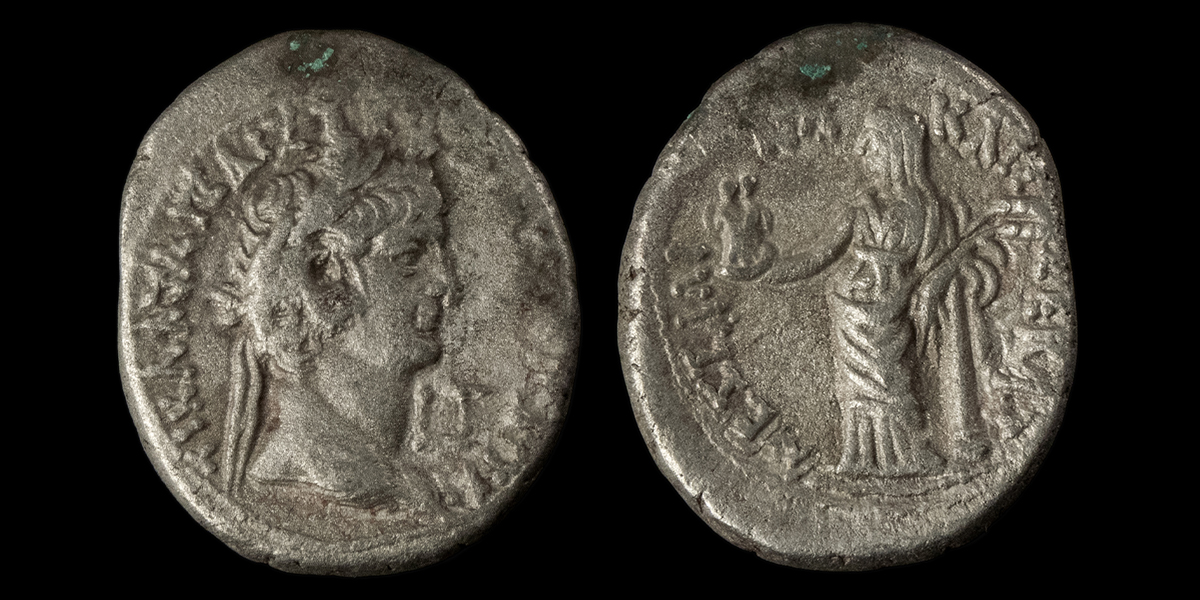
The tetradrachm originated in the Greek monetary world, but versions continued to be produced in Roman provinces, notably Egypt and parts of the eastern Mediterranean. Its literal name means 'four drachmai'. This does not mean that every Roman provincial tetradrachm had a fixed exchange value against the denarius: local currencies, metal standards and official valuations differed substantially.
The Alexandrian tetradrachm of Claudius and Messalina in the NumisAntica export is a particularly engaging example. It combines the Roman emperor's portrait with Greek inscriptions and an image of Messalina. Coins like this show how imperial authority could be expressed through established regional monetary customs.
At a glance: Greek-derived denomination · 4 drachmai in its own system
Assarion / Assaria
Small change in the Greek-speaking provinces
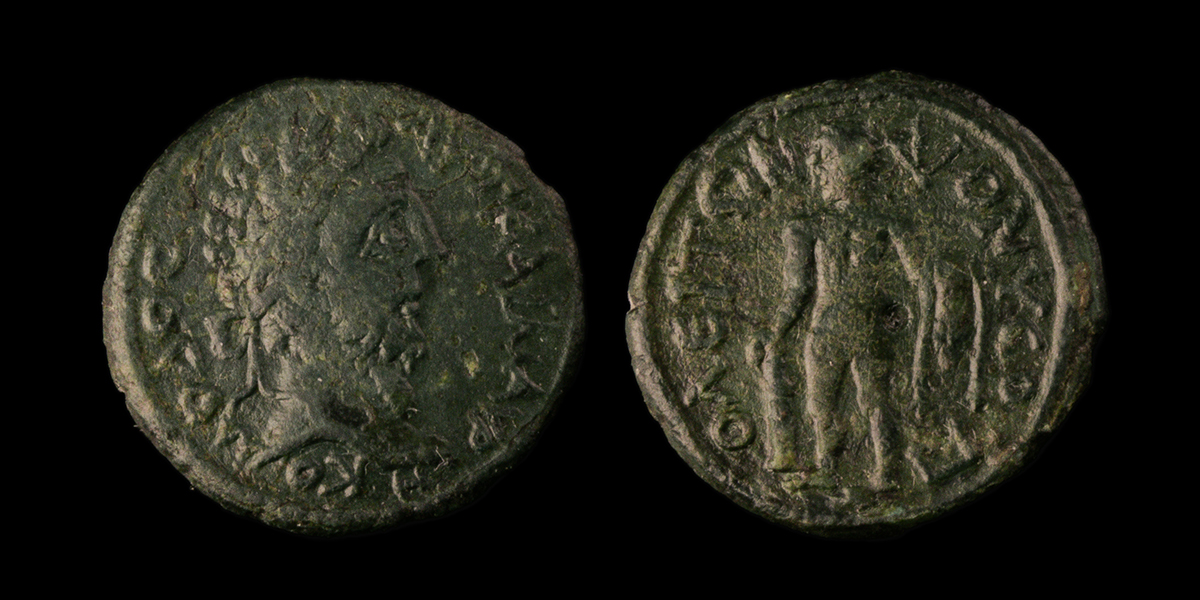
An assarion (plural assaria) was a bronze denomination used in parts of the Greek-speaking Roman world. Although its name is related to the Roman as, the conversion between local assaria and imperial money was not uniform. Some provincial coin series carried explicit value marks, while the value of others has to be inferred from their size, weight and local context.
The Commodus coin from Dionysopolis in the NumisAntica export is a useful example of locally issued bronze. Its Greek legends name the issuing community, while Heracles appears on the reverse. The coin belongs to a regional monetary landscape rather than a single uniform bronze system for the whole Empire.
At a glance: Local bronze denomination · Value varies by city and period
Pentassarion
Five assaria on a provincial coin
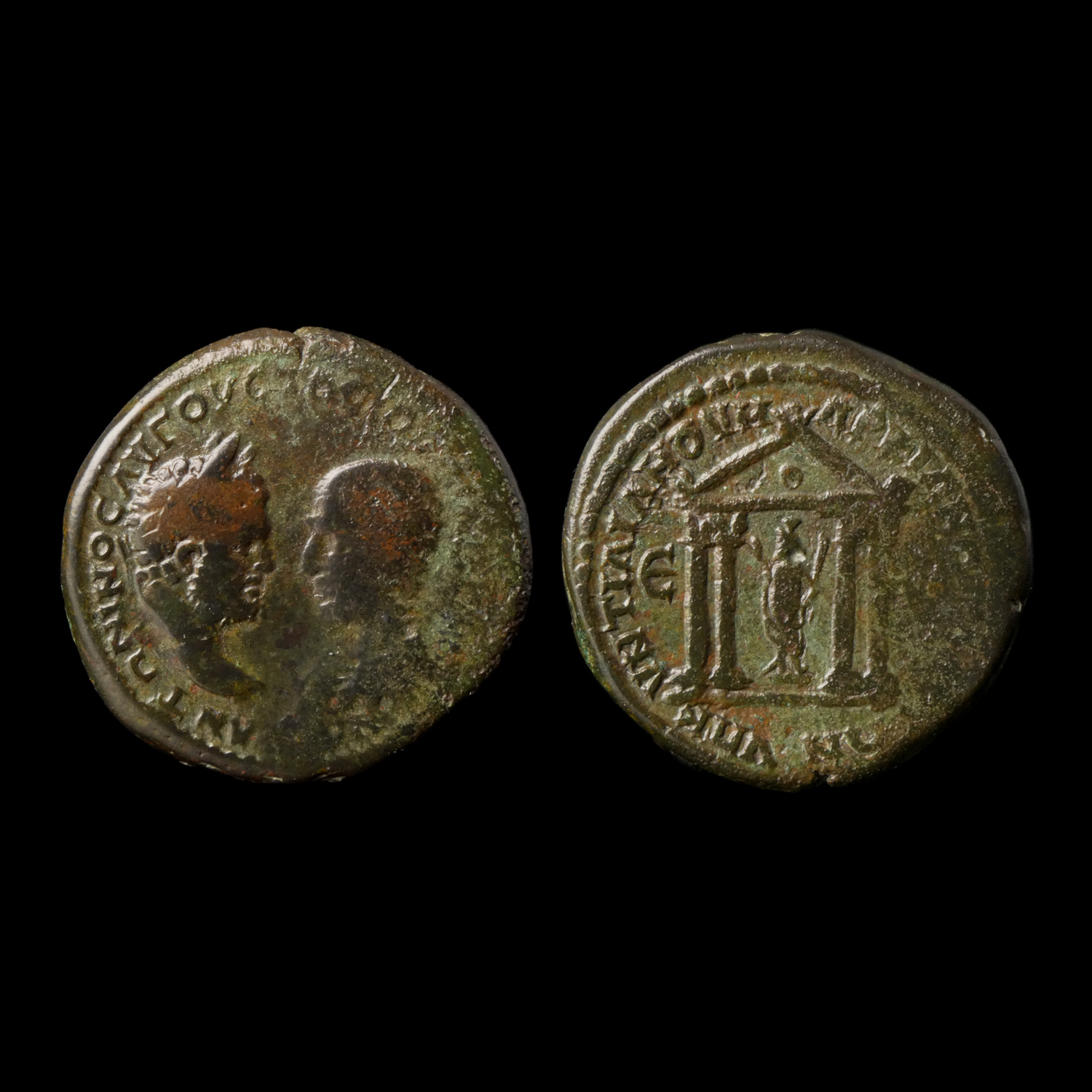
A pentassarion was a provincial bronze piece denominated at five assaria. Such coins belonged to regional systems rather than to the standard sequence of asses, dupondii and sestertii struck at Rome. Greek letters or numerals sometimes appear as marks of value, but their interpretation depends on the individual city and coin series.
The Caracalla and Julia Domna pentassarion in the NumisAntica collection places two members of the imperial family together on the obverse. The reverse depicts a temple and the god Serapis. It is a good illustration of how provincial coinage combined Roman dynastic imagery with local religious life.
At a glance: Provincial coin · 5 assaria in its local system
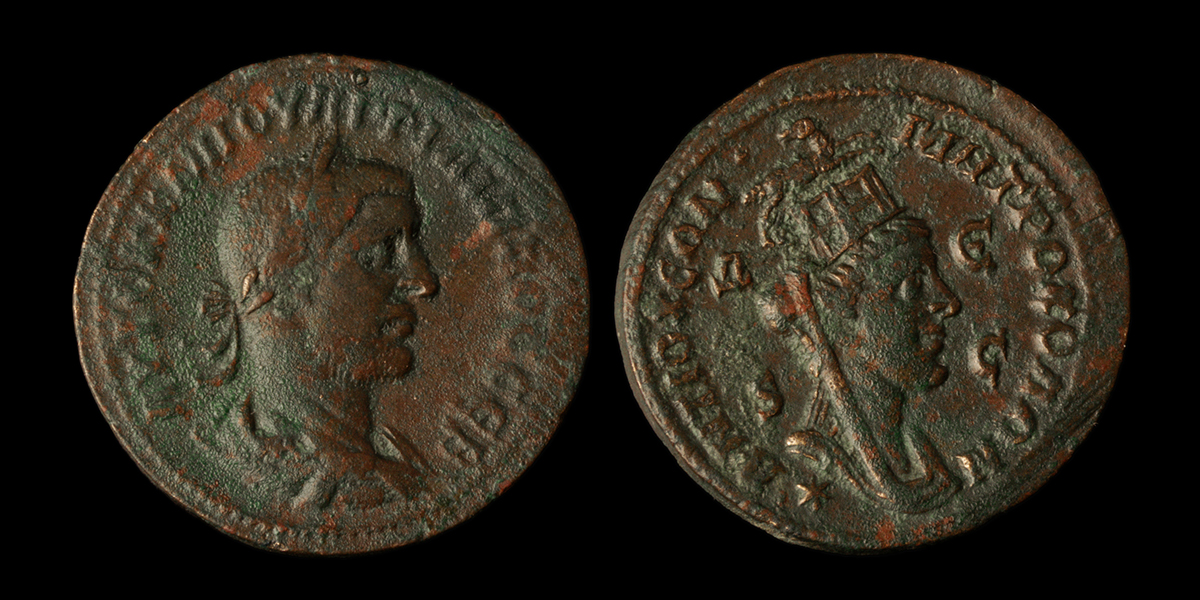
Octassarion / Eight Assaria
An eastern city's larger bronze denomination
Some Roman provincial cities issued larger bronze denominations, including pieces described as eight assaria, or octassaria. Their values cannot simply be translated into imperial asses without considering the local monetary system. A nominal number is therefore helpful for identification, but not a universal exchange rate.
One example in the NumisAntica export was struck at Antioch under Philip I. It has the emperor's portrait on one side and Tyche, the city's protective personification, on the other. Here the issuing city is almost as central to the coin's identity as the emperor whose name it carries.
At a glance: Provincial coin · 8 assaria in its local system
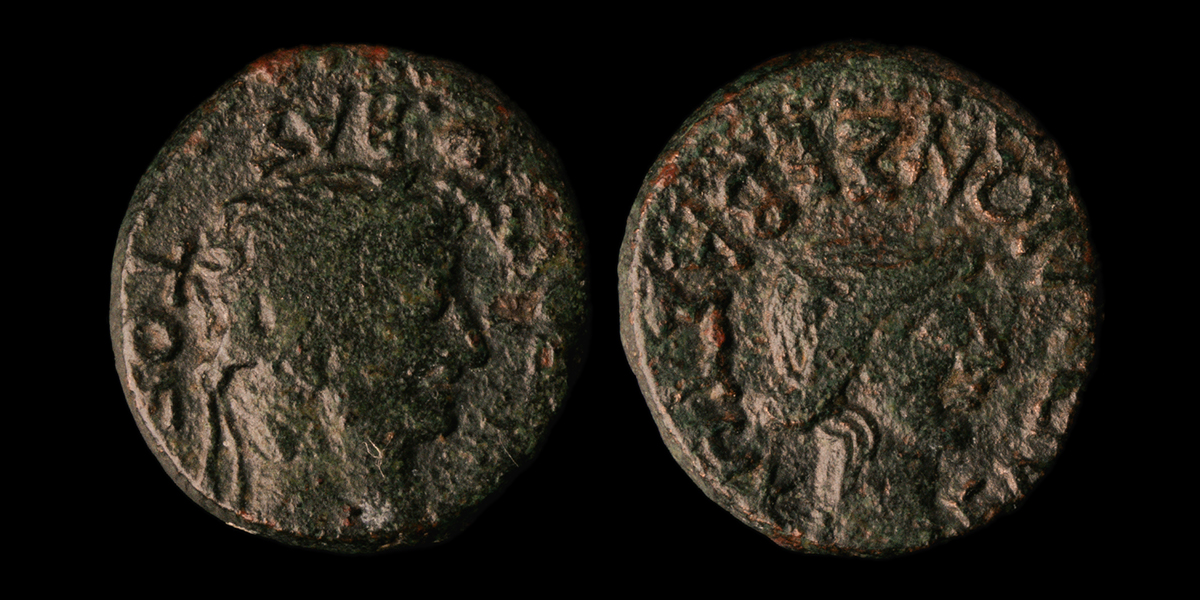
Provincial Bronze: Æ 20, Æ 21 and Similar Types
When the coin's size is known, but its value is not
A catalogue entry such as Æ 20 or Æ 21 indicates a copper-alloy coin measuring approximately 20 or 21 mm across. It is a practical description of the specimen's size, not necessarily the name of an ancient denomination. In many provincial series, assigning a precise nominal value would be more speculative than useful.
The Thessalonica bronze of Tiberius and Livia in the NumisAntica collection is a case in point. Both portraits and the Greek civic inscription are historically revealing, even though the coin is best introduced by city, emperor, metal and size rather than by an uncertain denomination.
At a glance: Size descriptions · Not automatically denomination names
Comparing Roman Coin Values
For the familiar system of the early Roman Empire, the denominations below had the following relationships. These were accounting and tariff values, not guarantees that coins always contained the same proportion of precious metal. The table must not be applied unchanged to third-century radiates or later reformed currency.
| Coin | Value in asses | Relationship to a denarius |
|---|---|---|
| Denarius | 16 | 1 denarius |
| Sestertius | 4 | ¼ denarius |
| Dupondius | 2 | ? denarius |
| As | 1 | 1/16 denarius |
| Semis | ½ | 1/32 denarius |
| Quadrans | ¼ | 1/64 denarius |
For context, the gold aureus was commonly tariffed at 25 denarii under the early Empire. The antoninianus was introduced at a nominal value of two denarii, but later monetary reforms and provincial currencies cannot be reduced to a single fixed conversion table.
What a Denomination Can Tell Us
Metal and appearance
A golden colour does not make every coin gold: sestertii and dupondii were commonly struck in brass. Equally, a silver-looking antoninianus may contain very little silver. Ancient composition, later corrosion and modern cleaning can all affect what we see today.
Size, crown and inscription
A large bronze coin may suggest a sestertius, while a radiate imperial portrait can help distinguish a dupondius or antoninianus in its appropriate period. Neither clue is infallible. The legend, reverse design, mint, weight and surviving parallels should be considered together.
Local traditions
On provincial issues, a Greek inscription or a local deity can be as important as the emperor's portrait. Where the denomination is uncertain, describing a coin by its metal and approximate diameter is often more accurate than assigning a speculative value.
Explore Roman History Through Coins
Whether you prefer the fine portraits of silver denarii, the monumental reverses of sestertii or the varied civic designs of provincial bronze, each denomination opens a different window on Roman history. Our coin descriptions bring together the surviving object, the historical context and the numismatic evidence, so that an individual coin can be appreciated for more than its date or metal.
Discover Roman Coins in Our Shop ?
Sources & Further Reading
- American Numismatic Society - Rome: A Thousand Years of Monetary History
- Friedrich-Alexander University - The Roman Imperial Coinage System
- Manchester Museum - Money in a Time of Crisis
- Macquarie University - Introduction to Ancient Numismatics
- National Archaeological Museum, Spain - The Tremissis
- Roman Provincial Coinage - Online
Coin identifications and catalogue examples: NumisAntica. Values and chronology are general historical guides; individual issues may differ.